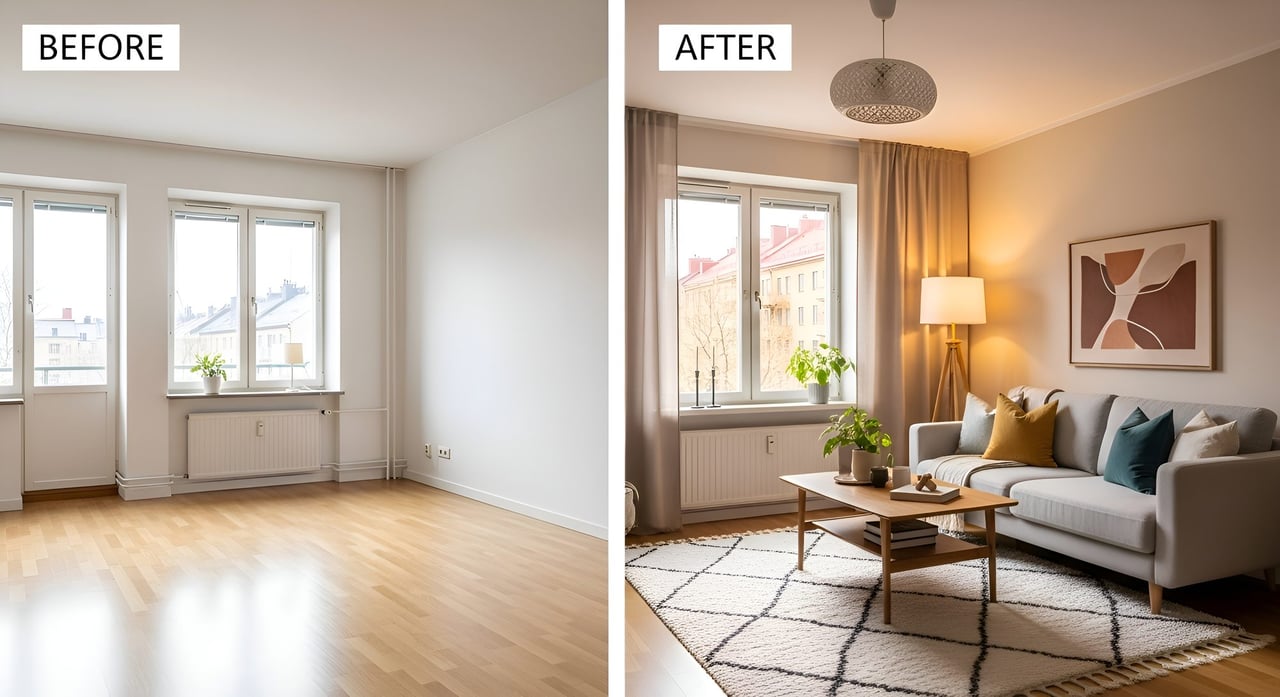
Staging works when it helps a buyer picture themselves living in the space, not because of any particular trend. The goal is simple: clean, organized, well-lit, and easy to imagine as someone else's home. Everything below comes down to that one idea.
What Staging Actually Does
Staging isn't about hiding problems or making a home look like a magazine spread. It's about removing the things that make it harder for a buyer to picture their own life there, and highlighting the things that make a space feel functional and cared for. A well-staged home photographs better, shows better in person, and gives buyers less to mentally work around when they walk through.
The Dos
- Declutter and depersonalize. Clear countertops, closets, and shelves down to what actually needs to be there. Pack away family photos and personal collections, not because there's anything wrong with them, but because buyers picture themselves in a space more easily when it isn't full of someone else's life.
- Deep clean everything. Baseboards, windows, grout, light fixtures. A home that's spotless reads as well-maintained overall, even in rooms buyers barely glance at.
- Take care of small repairs first. A dripping faucet, a scuffed wall, a cabinet door that doesn't close right. These are quick fixes, and buyers notice them even when they can't say exactly why a room feels "off."
- Maximize natural light. Open blinds and curtains, clean windows, and swap out any dim or mismatched bulbs before photos and showings.
- Give every room an obvious purpose. A spare room that's currently storage reads very differently once it's staged as an office or guest room. Buyers struggle to value a room they can't picture using.
- Handle curb appeal early. Mow, edge, trim overgrown bushes, touch up the front door if needed, and clear the walkway. The exterior is the first thing buyers see, both in person and in listing photos.
- Let outdoor living spaces show well. Patios, porches, and decks matter to buyers here, and they're easy to stage with a simple furniture arrangement and some tidying.
- Arrange furniture for flow, not just fit. A room should feel easy to walk through, not like a maze of furniture pushed against every wall.
The Don'ts
- Don't leave rooms overstuffed or over-cluttered. Too much furniture makes a room feel smaller than it is.
- Don't skip the small repairs. Cosmetic touch-ups are part of staging, but they're not a substitute for disclosing any real, known issues with the property.
- Don't over-personalize. Family photos, trophies, and strong collections are worth packing away for the same reason mentioned above, it's easier for a buyer to picture their own life in a neutral space.
- Don't rely on heavy air fresheners or scented candles. They tend to be more distracting than inviting, and a clean, well-ventilated home doesn't need them.
- Don't ignore closets, garages, and storage areas. Buyers open them. An overstuffed closet undercuts the "plenty of storage" impression just as much as a cluttered living room does.
- Don't stage a completely empty room and leave it at that. Buyers have a hard time judging scale in an empty space. A few key pieces of furniture go a long way.
- Don't leave valuables or personal documents out. Showings mean strangers walking through the home, so it's worth putting away anything you wouldn't want left in plain sight.
- Don't wait until the week of listing to start. Staging works best when there's time to handle repairs, decluttering, and curb appeal properly instead of rushing it.
A Few Notes for Central Texas Sellers
Outdoor space carries real weight here. Buyers touring homes in the Liberty Hill, Cedar Park, Leander, and Georgetown corridor tend to spend real time evaluating patios, porches, and yards, not just the interior, so it's worth giving those areas the same attention as any indoor room. In a market where most buyers are scrolling listing photos before they ever request a showing, a home that photographs well from the curb through the backyard has a real advantage in getting that first click.
FAQ
Do I really need to stage my home to sell it? Staging isn't required, but it generally makes a home easier for buyers to connect with, both in photos and in person. Even light staging, like decluttering and depersonalizing, tends to help.
How much does home staging cost? It varies widely based on the size of the home and whether it's a full professional staging or a lighter DIY approach using what's already there. It's worth getting a quote from a local stager for an exact number.
Should I stage every room? Not necessarily. The rooms buyers weigh most heavily, typically the living room, primary bedroom, and kitchen, are worth prioritizing if time or budget is limited.
Can I stage a home myself without hiring a professional? Yes, especially for the basics: decluttering, deep cleaning, small repairs, and rearranging existing furniture. A professional stager adds the most value on larger or vacant homes.
Does staging help a home sell faster? It's widely considered a best practice for helping buyers connect with a space more quickly, though results vary by home and market. Your agent can speak to what's working in current local conditions.
Closing Thought
None of this requires a full renovation or a big budget. Most of what makes a home show well comes down to cleaning, decluttering, and taking care of the small stuff before it becomes a distraction. If you're thinking about listing and want a second set of eyes on what to prioritize, reach out and we'll walk the property together.
