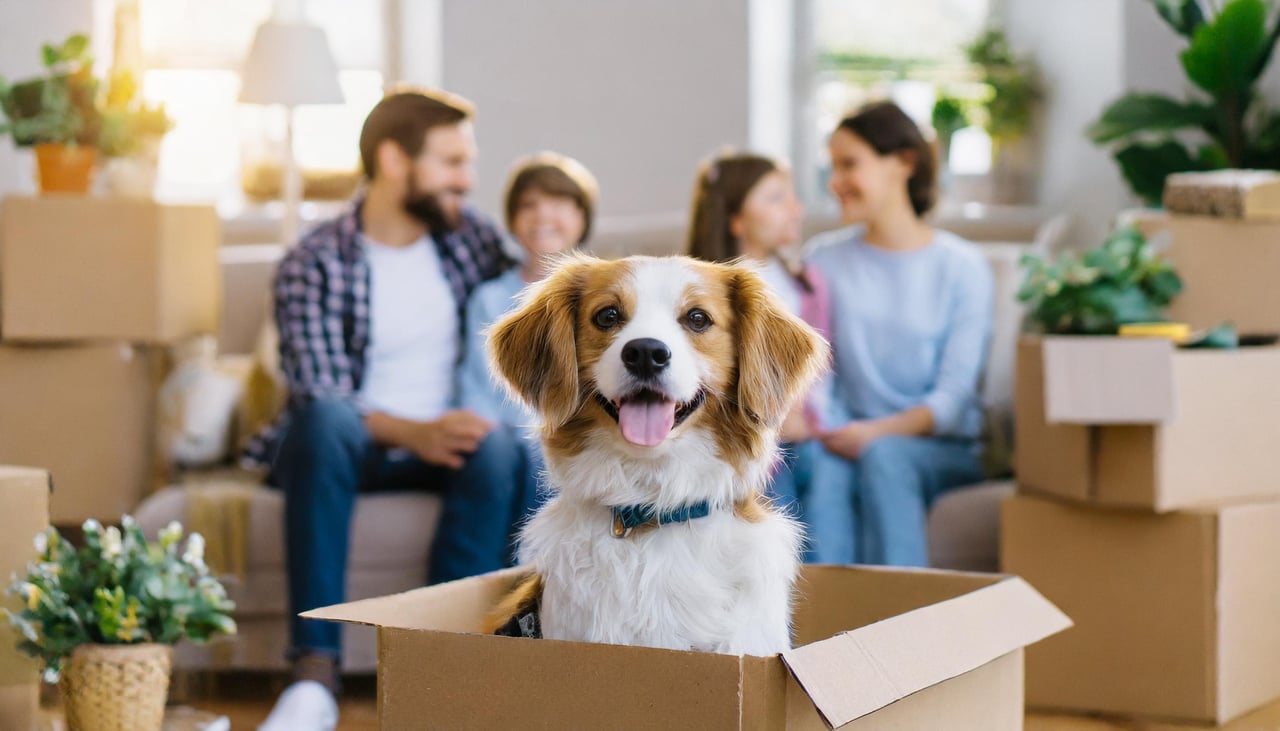
Buying or selling a home comes with a long checklist. Somewhere between the inspection and the moving truck, it's easy to forget that your pets are going through this transition right alongside you. If you've got a dog, cat, or both, a little planning can turn moving day from chaotic to calm for the whole family, four legged members included.
Here are some practical ways to help your pets adjust before, during, and after your move.
Think About Your Pet When You're House Hunting
When you're touring neighborhoods and floor plans, it helps to picture the space from your pet's point of view, not just yours.
Walk the block. Before you fall in love with a house, spend some time on foot in the surrounding streets. Notice whether there are loose or aggressive dogs nearby, and whether the area feels safe for walks.
Cats want height, not just square footage. A smaller home can still work well for a cat if there's room for shelving, cat trees, or perches. Vertical space matters more than floor space.
Dogs have different needs depending on age and training. A young puppy or a senior dog who needs frequent bathroom breaks may struggle in a third floor walk up or a home without easy yard access. Worth factoring in before you write an offer.
If you're weighing a few properties and want a second opinion on how pet friendly each one really is, that's a conversation I'm always happy to have.
Prepping Your Pet for Moving Day
Cats especially don't love surprises, and most pets pick up on the stress of packing boxes long before the truck shows up.
A few things that help:
- Bring moving boxes into the house early so they stop feeling novel and threatening.
- Pack up your pet's room last, so they have one familiar space as long as possible.
- On moving day itself, keep pets in a quiet, closed off room, or better yet, at a friend's or sitter's house while the movers are in and out.
- Stick to normal feeding and walk times as much as you can. Routine is reassuring, even when everything else is upside down.
If There's a Road Trip Involved
Not every pet is used to spending hours in a crate or car. If your move involves any real travel time, start preparing weeks in advance:
- Get your pet comfortable with the crate gradually. Feeding meals inside it with the door open, then eventually closed, works well.
- Practice with short trips around the block before the real thing.
- Pair crate time with something positive, a treat or a favorite toy, so it starts to feel like a good place rather than a punishment.
Pet-Proof Before You Unpack
Once you're in the new place, walk through it with fresh eyes before you let your pet loose:
- Tuck away or cover exposed cords
- Check that window screens are secure
- Clear out any plants that are toxic to pets
- Confirm the previous owners didn't leave pest control traps or bait behind
Let Them Ease In, Not Jump In
It's tempting to open every door and let your dog or cat explore the whole house at once. Most pets do better with a slower introduction.
Start with one home base room stocked with their bed, food, water, and litter box if you have a cat. Once they seem settled, open up access to one new room at a time, keeping the rest closed off for now. If you need to move a litter box to a new spot permanently, shift it gradually, a foot or so each day, rather than all at once.
Moving is an adjustment for everyone in the household, pets included. A little patience in those first few weeks goes a long way toward making the new house feel like home for all of you.
Thinking about buying or selling in the Austin area, pets in tow? I'd love to help you find a place that works for your whole family. Reach out anytime.
